
Latest Post
Faqs
Blogs
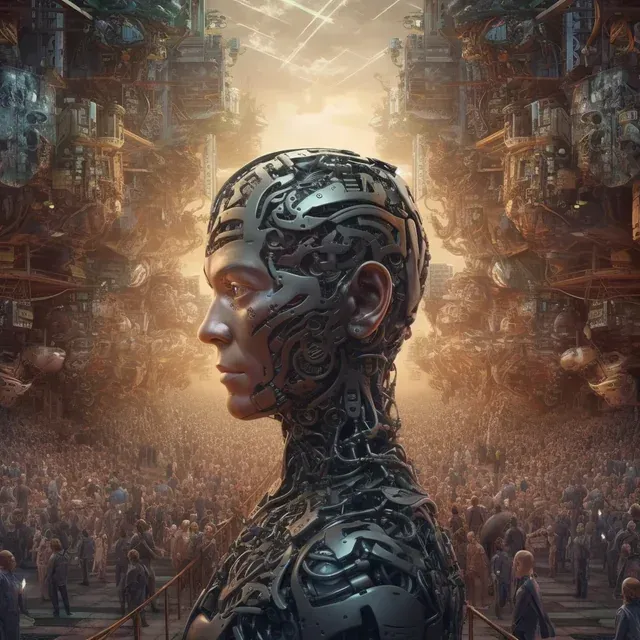
The Rapid Rise of AI: Where It's Heading and How We Can Prepare
Artificial intelligence (AI) has seen stunning progress over the last decade, achieving new capabilities in areas like natural language processing, computer vision, game-playing, robotics, and more. Systems can now translate languages, diagnose diseases, beat humans at poker, and even create convincing synthetic media like "deepfake" videos. While current AI excels at narrow tasks, experts believe advanced, general AI with human-level reasoning abilities is still decades away. Yet the pace of progress suggests such systems could arrive sooner than expected, bringing transformative potential as well as peril.
Today's AI relies heavily on machine learning techniques, where systems are trained on huge sets of data to recognize patterns and make predictions. AI has achieved superhuman skills in domains with clear rules and large datasets - such as games like chess and Go. However, AI still struggles with common sense reasoning, adapting to novel situations, and understanding causality. There are also concerns about bias in data and algorithms causing issues like facial recognition failing for non-white faces. While AI development continues rapidly, experts stress that human-level AI remains difficult and distant.
Nonetheless, if progress continues, AI systems are projected to handle increasingly complex real-world tasks like driving cars, diagnosing diseases, having natural conversations, and even making scientific discoveries or composing music. AI assistants may become ubiquitous, able to answer questions, take instructions, and operate with minimal human oversight across homes, offices, and public spaces. Industrial robots with enhanced senses and dexterity could automate manufacturing and warehouses. Autonomous AI weapons could change the nature of warfare.
These applications raise concerns about large-scale job automation and displacement. Some estimates suggest 30-50% of jobs may become automated by AI in coming decades, requiring massive workforce retraining. It also highlights risks of misuse, hacking, or unintended consequences if granted improper control. Advanced AI could potentially be the most impactful technology in human history, for better or worse.
Some theorists speculate AI could eventually become capable of recursive self-improvement, allowing it to rapidly exceed human-level intelligence in an "intelligence explosion." This remains controversial, but reflects unique risks from advanced AI. As AI safety expert Eliezer Yudkowsky states, "The AI does not hate you, nor does it love you, but you are made of atoms which it can use for something else." Ensuring AI systems align with human values and ethics becomes increasingly challenging as capabilities grow.
So how can society responsibly navigate the transition toward transformative AI systems? Experts propose several crucial steps:
- Massive investment in AI safety research and ethics boards to ensure reliable, controllable, and socially beneficial systems. Approaches like machine ethics, AI transparency, and AI value alignment are active areas of study.
- International collaboration between governments, companies, and researchers to develop best practices and governance structures guiding AI progress. Regulation and oversight may be needed on issues like autonomous weapons.
- Educational initiatives to equip students and workers with AI-related skills and make AI literacy as fundamental as math or science literacy. Governments must fund programs to retrain those displaced by automation.
- Development of techniques to align sophisticated AI systems with broadly held human values. This very difficult problem requires input from ethics philosophers, social scientists, and diverse global populations.
- Contingency planning and further study of existential risks, both to estimate their likelihood and formulate mitigation strategies. Advanced general AI may warrant cautious deployment and controlled testing.
Striking the right balance between fostering AI’s benefits and managing risks is critical. The choices made today - in labs, governments, and boardrooms - will shape the future course of AI and its impacts on society. Many call this the most important conversation humanity can be having today. With foresight and responsible stewardship, advanced AI can empower human flourishing and amplify wisdom. But we must act urgently and thoughtfully to steer AI toward benevolent outcomes for the common good. The rise of intelligent machines is inevitable, but our collective future depends on the foundations we build today.


Glow Effortlessly! Book Your Spa Experience Today!







Unwind, rejuvenate, and embrace your beauty with our exceptional spa treatments tailored just for you.


Opening hours
Mon - Wed : 9AM - 4PM
Sunday: 9AM - 4PM
Monday: 9AM - 4PM
© Delbay Systems 2026 All Rights Reserved.